AI in insurance has moved from pilots to production. The insurers that lead are using it where the work is high in volume and heavy in documents: claims, fraud detection, underwriting intake and customer service. The rest of the industry is experimenting widely but scaling slowly, and the gap between the two groups is growing.
I talk with claims, underwriting and service leaders at insurers across Europe and the Middle East almost every week. The conversation used to start with "what could AI do for us?" Now it starts with "our competitor already does this, how fast can we follow?" This article is my answer to that question: where AI already runs in insurance, what the leaders report, and what separates them from the rest.
The European insurance supervisor EIOPA surveyed 347 insurers across 25 countries and found nearly two thirds already actively using generative AI. Most of them, however, are still at the proof of concept stage. Bain found a similar picture among property and casualty insurers: 78 percent use generative AI in some capacity, but only 4 percent have scaled it.
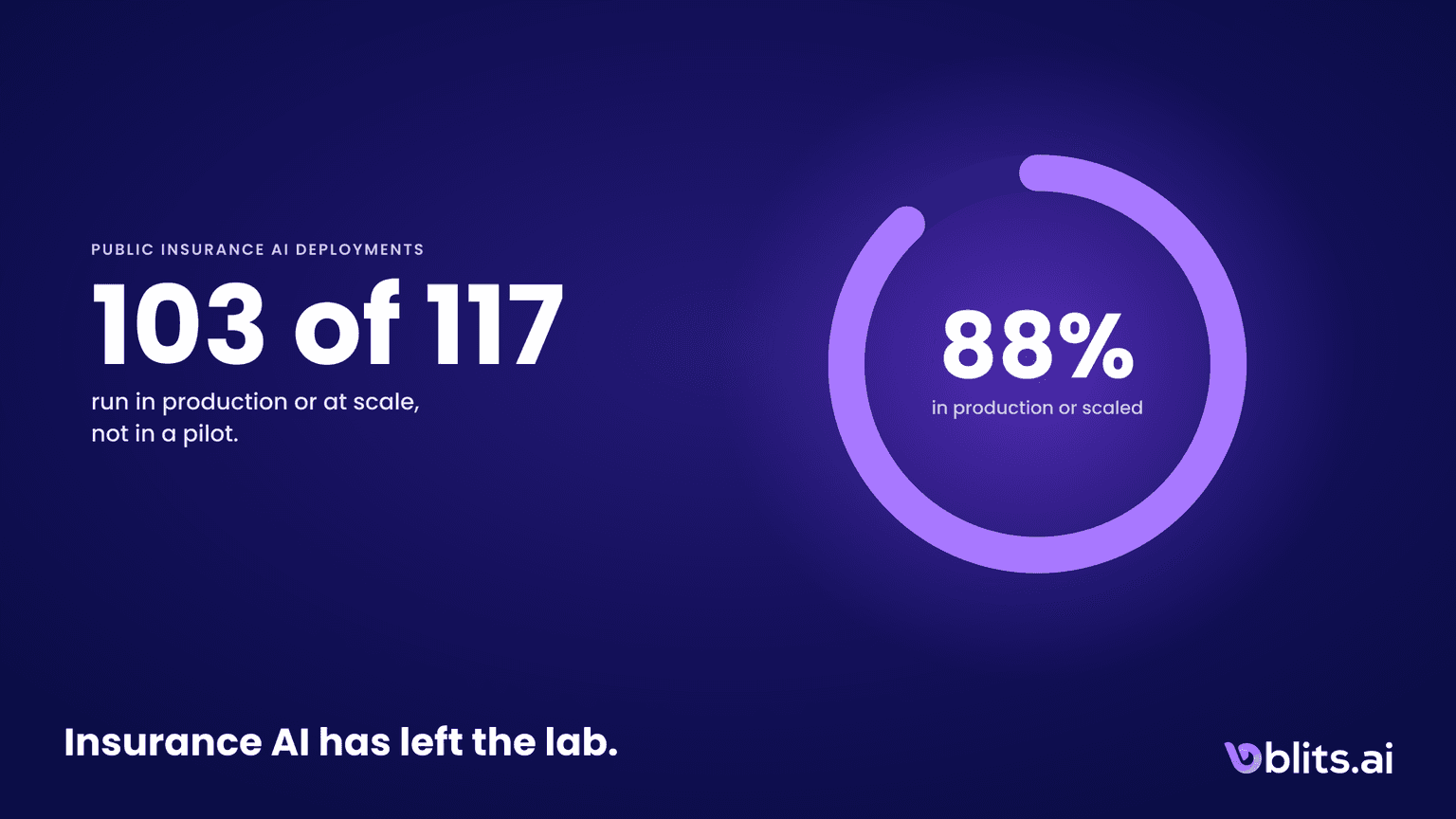
The public record shows the other side. We have documented 117 public AI deployments at insurers in the AI Use Case Library, and 103 of them run in production or at scale. The insurers that talk about their AI publicly are the ones that made it work.
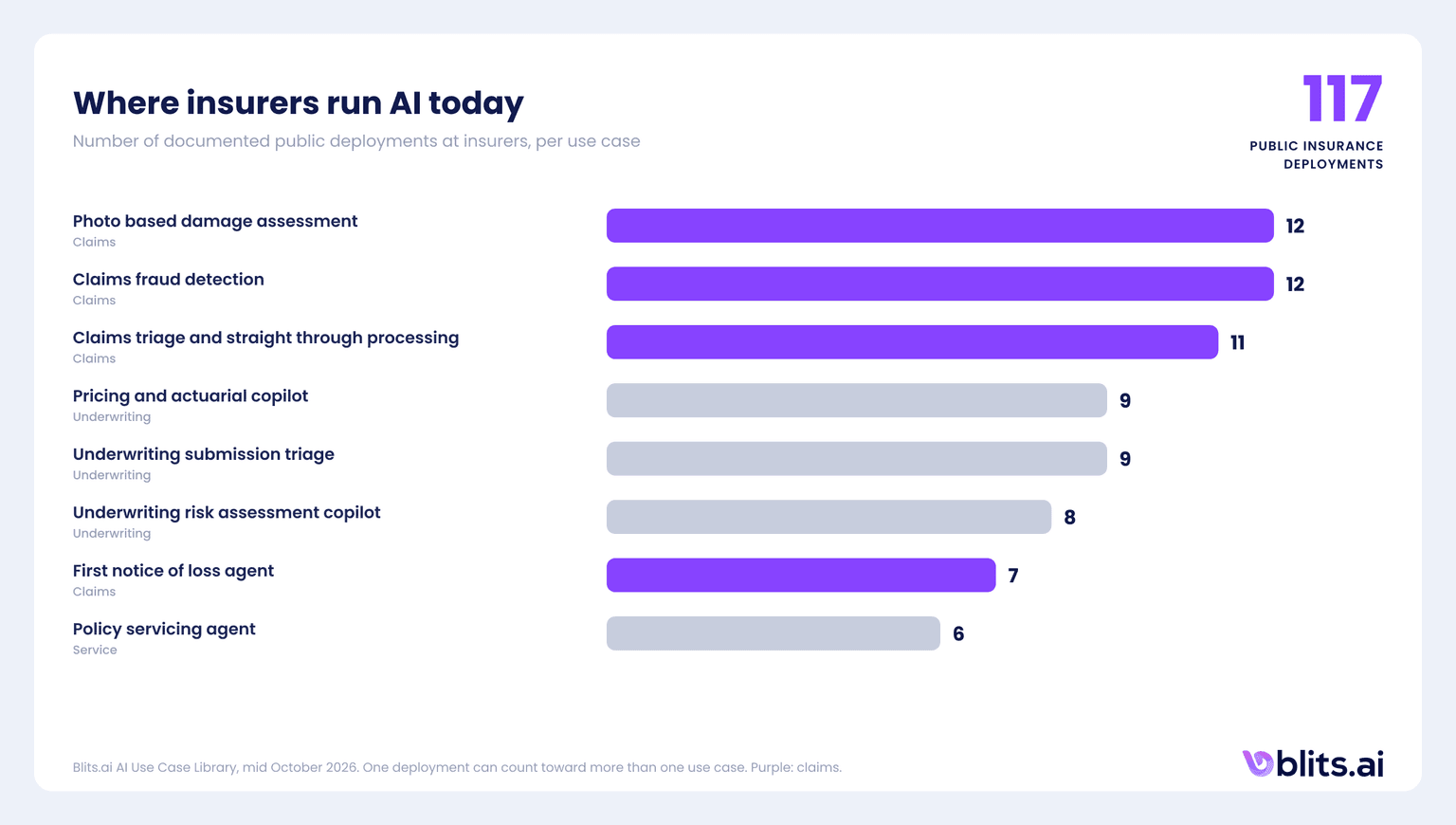
Claims dominate the list, and for good reason. Every claim follows a known path, involves documents and photos, and has a clear outcome. Three of the five most common insurance use cases in our library are in claims: photo based damage assessment, claims fraud detection and claims triage with straight through processing.
The results insurers report are significant. Allianz launched Project Nemo in Australia in July 2025 for small food spoilage claims after storms. The workflow uses seven specialized AI agents, and Allianz reports an 80 percent reduction in claim processing and settlement time, while a human agent still makes the payment decision. Ping An reports that in 2025, 70 percent of personal injury claims were settled automatically, in as little as 51 seconds, and that smart fraud detection saved RMB 10.51 billion in claims. Aviva has said that using AI in motor claims saved it more than £60 million in 2024, as reported by Mortgage Solutions.
Lemonade shows what happens when claims automation is built in from the start. In its Q2 2026 letter to shareholders, the company reported a loss adjustment expense ratio of 5 percent, against an industry average of about 9 percent, and linked it to higher instant claim rates and AI assisted workflows.
Commercial underwriters spend a large part of their day reading submissions: emails, broker documents, schedules. That is exactly the work AI does well. Zurich reports that after rolling out an AI underwriting intake platform from Cytora, its vendor, straight through processing of submissions rose from 10 percent to 95 percent and manual triage time fell from 75 to 15 minutes, according to figures reported by Insurtech Insights.
In our library, underwriting submission triage and underwriting risk assessment copilots are among the most documented use cases after claims.
In underwriting, the AI reads, extracts and prepares, and the underwriter decides.
The third area is service: answering policy questions, processing changes and handling the first notice of loss. Ping An reports that AI agents handled 80 percent of the group's total customer service volume in 2025. For most European insurers the realistic goal is less dramatic but just as valuable: an assistant that completes routine policy changes end to end and hands over everything else with the full context. I wrote about what separates the service projects that work from the ones that get reversed in AI Customer Service in 2026.
In insurance, AI wins where the work is high in volume, heavy in documents and clear in outcome. That is claims first, then underwriting intake, then service.
Insurance is one of the few industries named explicitly in the EU AI Act. AI systems used for risk assessment and pricing of individuals in life and health insurance are classified as high risk, with requirements for risk management, data quality, human oversight and documentation. Claims handling, motor and property pricing are not in that category, but supervisors increasingly expect the same discipline everywhere. EIOPA's survey shows that 49 percent of insurers now have a dedicated AI policy, up from a quarter in 2023.
The practical lesson is to design for oversight from the start. The insurers in production all keep a person on the consequential decision, the payment, the cover, the rejection, and log every step the AI takes. That makes it easier for regulators and customers to accept the automation around it.
From what we see in our own projects, three things keep insurers stuck at the pilot stage.
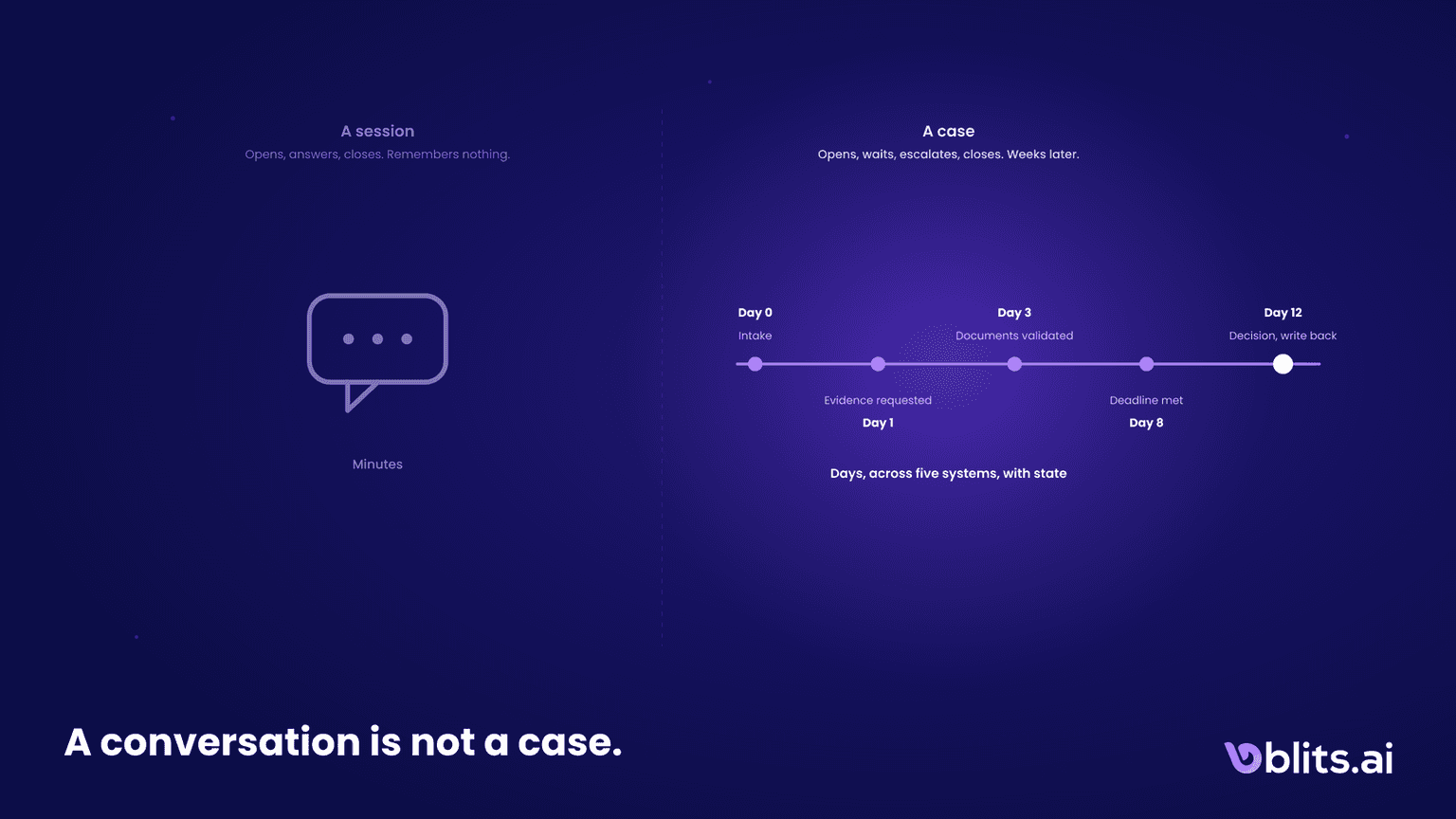
A chatbot that explains how to file a claim is easy to build and easy to demo. A workflow that registers the claim, checks cover, requests the missing documents and prepares the decision is where the value is. I explain how these workflows are built in Agentic Workflows Explained.
Without access to the policy administration and claims systems, AI can only advise. The insurers in production connected those systems early.
Successful projects have a business owner with a clear target: settlement time, straight through rate, cost per claim. Without that, a pilot has no reason to become production.
If you work at an insurer and want to see which of these use cases fit your book, you can talk to our insurance team. We will go through what we see in the market and what we build for insurers, starting from your claims and underwriting volumes.