AI Technology23-06-20203 min read

Opening the Natural Language Understanding (NLU) Blackbox

NLU is often treated as a black box, but knowing how it works is key to building effective conversational AI. A look inside.

Paul Coerkamp
Paul Coerkamp
CEO & Co-Founder
Opening the Natural Language Understanding (NLU) Blackbox

Say you are about to build a chatbot, and you want it to be AI powered: sooner or later someone on the project will ask which NLU engine you are going to use. Natural Language Understanding (NLU) is often treated as a black box, which makes that a hard question to answer. It is worth opening the box a little, because the engine decides for a large part how well your conversational AI solution will understand its users.

What NLU actually does

Technically, NLU is the part of the system that takes what a person types or says and turns it into structured data a machine can work with. It sits between the user's sentence and everything the bot does next. Get the meaning wrong there and the rest of the conversation fails.

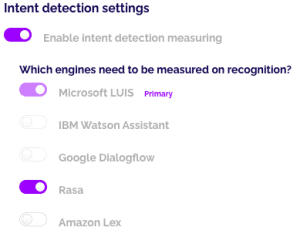
Most engines do four things. Intent classification decides what the user wants to do, for example "block my card" or "change my address". Entity extraction pulls out the details in the message, like a date, an amount or a product name, and context management keeps track of the conversation over several turns, so that a follow up such as "and for my partner?" still makes sense. And confidence scoring puts a number on each prediction to show how sure the engine is.

Choosing the right NLU engine

There is no single best NLU engine. Each has strengths and weaknesses. What matters is how it performs in your situation. Start with accuracy in your own domain, measured on your own examples (a vendor demo tells you very little). Then look at how much training data the engine needs, how far you can customize it and how easy the API is to integrate. Cost matters too, as does scalability. If you serve customers in more than one language, check language support early, because quality can differ a lot from one language to the next.

Testing and maintaining it

Whichever engine you pick, test it with real user data before going live. People phrase things differently from the project team that wrote the training examples, with typos, half sentences and three questions in one message. After launch, keep monitoring and improving. Manage your training data carefully. A few wrong examples can confuse a model. Decide what the bot does when the engine is not confident, for instance ask a clarifying question or hand over to a human agent. And plan regular updates and retraining, as products, policies and the way people talk all change over time.

None of this requires you to be a data scientist. Knowing roughly what happens inside the engine is enough to make better choices about your chatbot architecture and to ask vendors sharper questions.

Updated on 12 October 2026.

Paul Coerkamp
Paul Coerkamp
CEO & Co-Founder
Writes about Business Strategy, Enterprise Sales, AI Implementation, Startup M&A
Paul Coerkamp on LinkedIn
Published on 23-06-2020

Related Articles

9 Things I Really Hate About AI
AI Technology12-05-2025

9 Things I Really Hate About AI

I think it's great that technology is so embedded in our daily lives. It helps us get knowledge faster, finish tasks more efficiently, gives us inspiration, and occasionally scares the hell out of us with those crazy (fake) videos. I help a lot of companies implement AI, so in the end it pays my bills. But after spending a ridiculous amount of time with all these new technologies, it's time to write down the things I really hate about AI.

Read More →
A Conversation Is Not a Case
AI Technology06-10-2026

A Conversation Is Not a Case

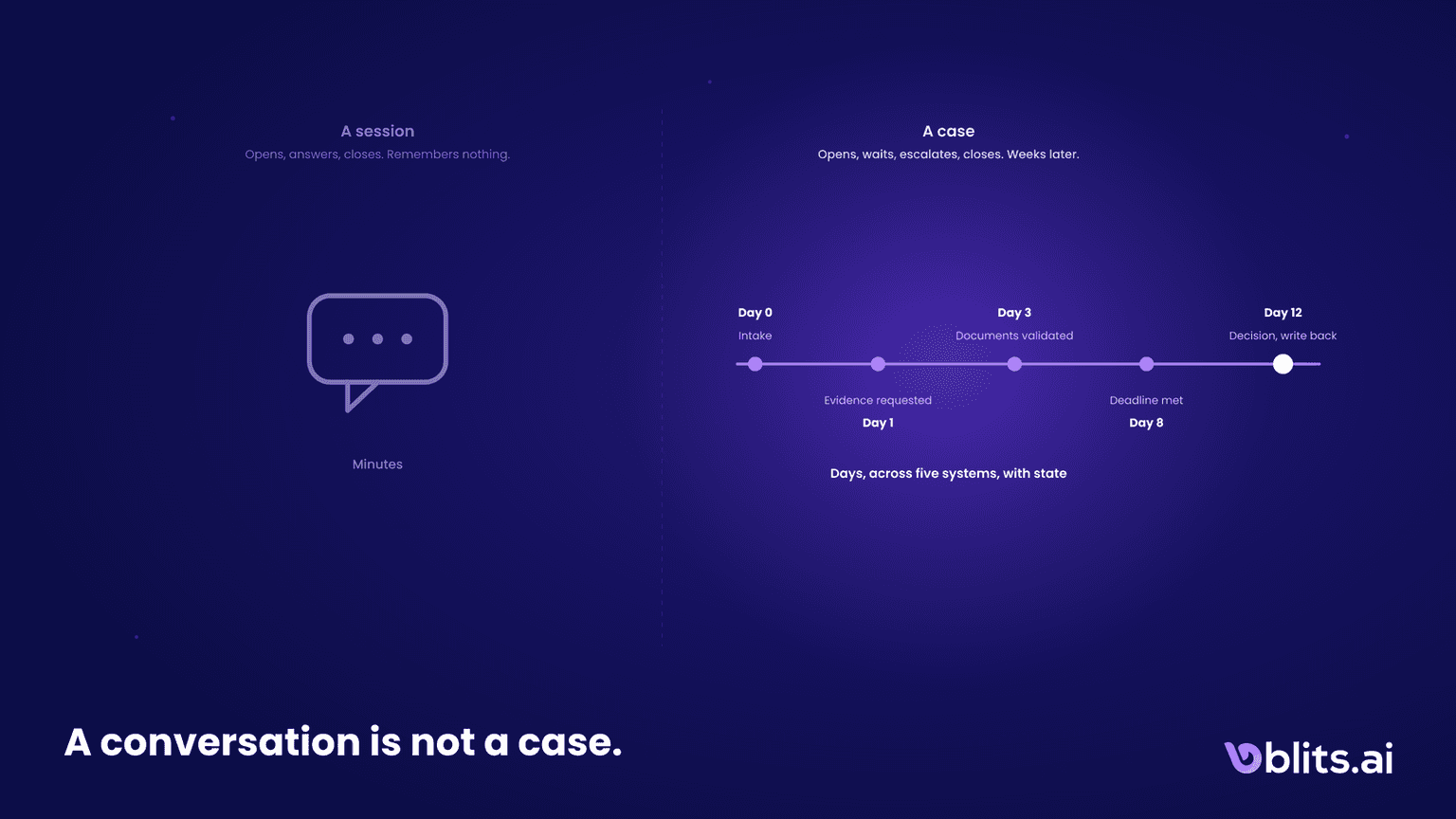
The 95 percent pilot failure stat is making the rounds again, this time with a diagnosis I actually agree with: chatbots automate sessions, but a bank runs cases. Why the unit of work decides whether your AI survives production, and the day eight test that shows which one you built.

Read More →
Agentic AI Languages and Dialects: Why Voice Quality Is Still the Hard Part
AI Technology10-04-2026

Agentic AI Languages and Dialects: Why Voice Quality Is Still the Hard Part

Agentic systems promise autonomous workflows, but speech and dialect quality fail first. Why Arabic, Turkish, Chinese and more run into the same gap.

Read More →

Stay Updated

New posts on conversational AI, enterprise automation and customer experience, sent to your inbox when they go live

No spam, unsubscribe at any time