We ship continuously, which makes it easy to miss how much an agent can do now that it couldn't do in January. So here's a plain language roundup of the five biggest additions from the last six months: what each one is and what it changes for your customers. I've left the engineering detail out and kept the parts you'd actually notice.
At a glance:
- Voice emotions, in the spoken voice and in the digital human
- A growing library of rich interactive cards inside the chat
- Agentic tasks, so the agent can schedule and defer actions and act on triggers
- Agentic Pay, for payments inside the conversation, built to PCI-DSS Level 1
- Response feedback with self learning, so ratings turn into improvements
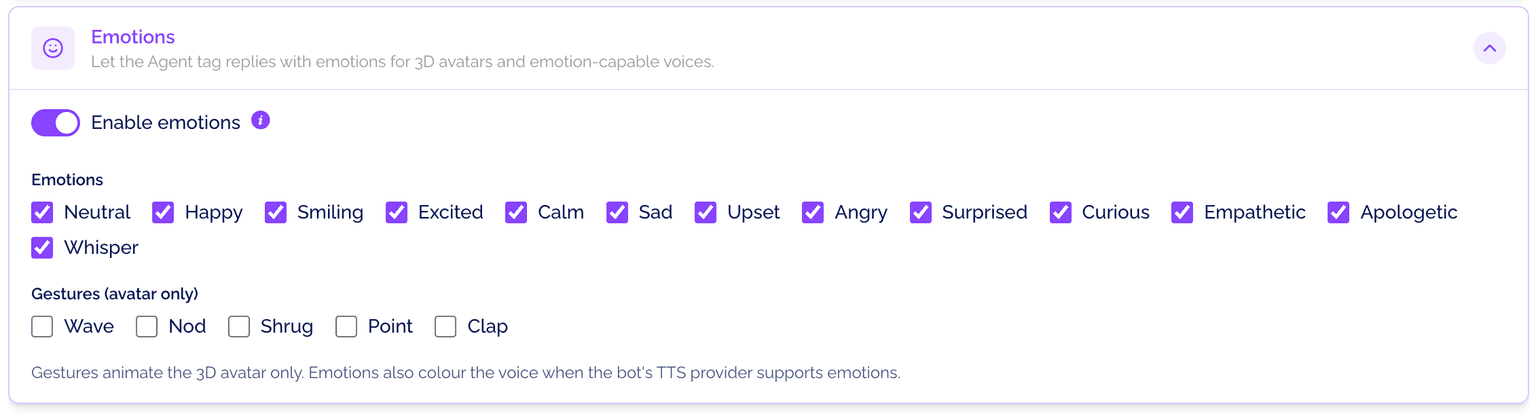
Agents can now express emotion. Warmth, calm, empathy, or a firmer tone when the situation asks for it, and one cue drives both the digital human's face and the spoken voice. A reply can even change tone halfway, opening calm and landing firm. You switch it on as a setting on the agent instead of hand writing it into a prompt, and it works across the voice engines we support, including Gemini, ElevenLabs, Azure and Cartesia.
The same release fixed a rough edge. Emotion cues could occasionally get read aloud or show up as stray characters, and that's now handled cleanly on every channel.
A voice that sounds like it means what it says builds trust, and you need that trust most in the moments that count, like a complaint, a declined payment or a sensitive request. If you want to know why voice quality is so hard to get right, read dialects and the voice quality gap. This one is live.

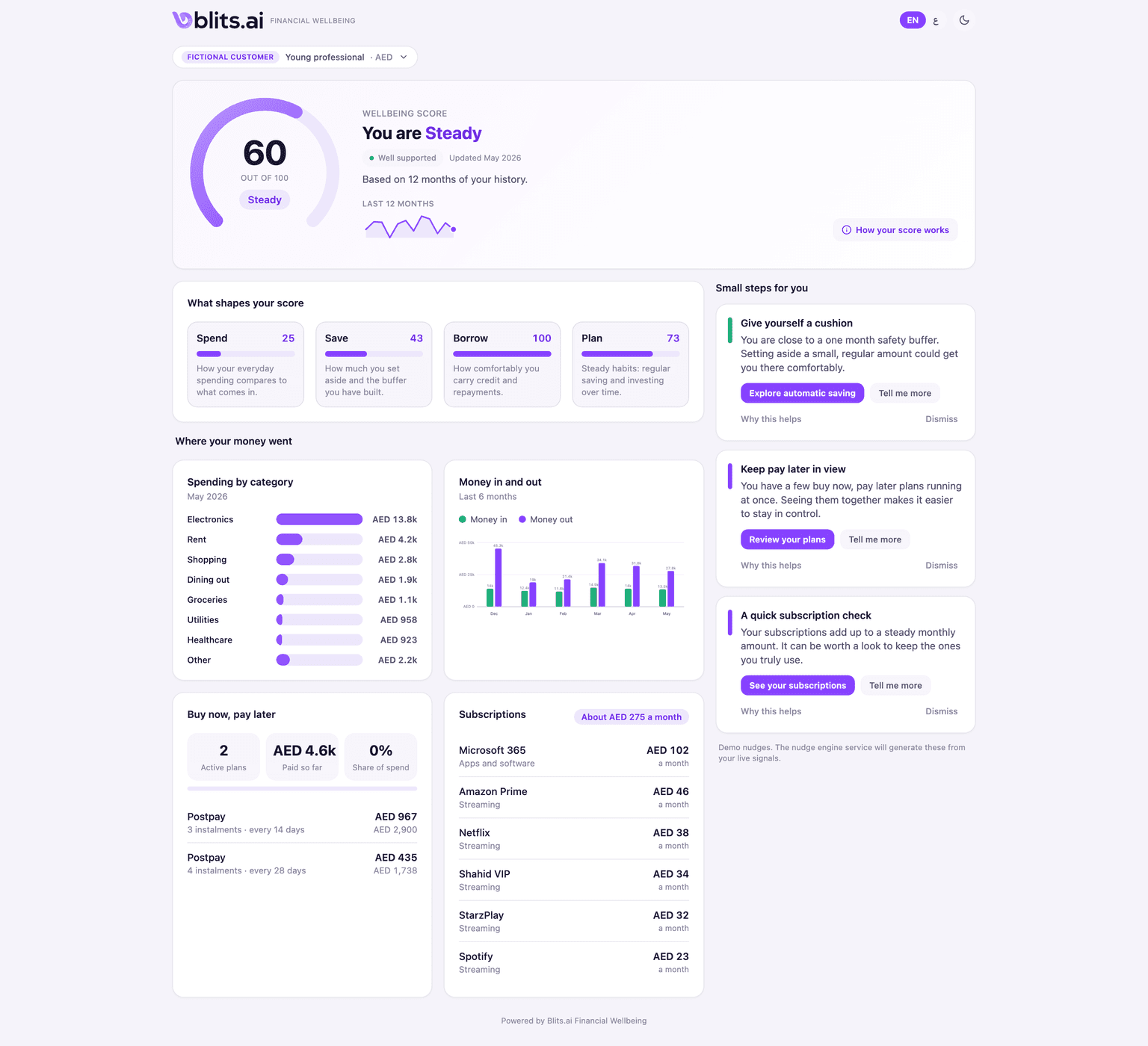
An agent now renders interactive components right in the conversation. Think swipeable flight and hotel carousels, product and loyalty cards, receipts, a spending graph, a secure field for a one time code, and native WhatsApp buttons and lists (instead of a menu pasted into a message). Customers scan and tap, they don't have to read and type.
The cards are also reliable by construction. The agent builds each one as a validated action and never as free form text, so whole classes of "the card didn't render" bugs simply can't happen.
What you get is customers who act instead of read, which means better conversion and clearer flows. The right card shows up at the right moment, whether that's a payment, a receipt or a choice, inside an otherwise normal conversation. It works on mobile, on the digital human and in WhatsApp, each time with the channel's own native elements. Cards are on by default for new agents.

With agentic tasks an agent can take on work that happens later, by itself. A follow up when something hasn't arrived, a check that runs every morning, or an action that starts the moment a specific email lands or a file gets uploaded. Before it commits, the agent confirms what it's going to do and keeps a summary of what's queued, so nothing slips through.
So the agent works proactively instead of only reacting, and it stays bounded and reviewable while it does. It's live with our first customer on a travel use case.
Agents can now take a payment inside the conversation, send a payment link, confirm a transaction and show the result as a clean card, all without your business ever touching raw card data. Card details are tokenized straight through the payment provider. The platform never stores a card number or a security code, and the sensitive part runs in its own tightly scoped environment. We built it to the PCI-DSS Level 1 standard and connected multiple payment providers, including regional ones like Qi in Iraq, so it works in the markets our customers operate in.
These are compliance grade rails for moving money inside a conversation, the kind a risk team can actually approve. For the practical side, see how to let an agent transact without losing control. Agentic Pay is live.
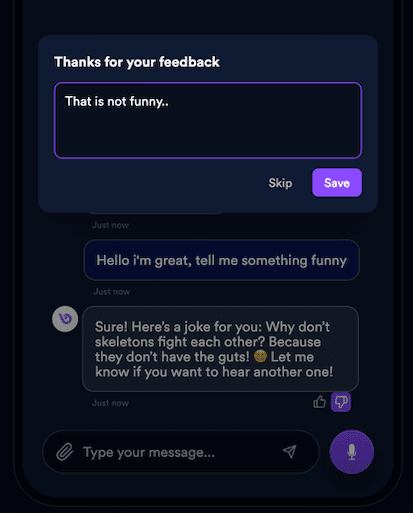
Customers can now give any reply a thumbs up or down and add a comment. We capture that feedback, tie it to the exact response it's about and collect it in one place your team can review, so you see where the agent does well and where it misses. The signal also feeds back into the agent. It improves from real conversations, and nobody has to rewrite a prompt every quarter to get there.
That gives you a clear, structured read on quality and an agent that gets better on its own. It's the self learning shift we called the next frontier in Johannesburg, and it's live as well.
Put together, that's an agent that can convey emotion, show things instead of describing them, act on its own schedule, take a payment your compliance team signs off on, and learn from whether it got it right.
None of it shipped as a big bang launch. Each piece went live when it was solid enough to trust with a real customer on a real account. If any of it maps to something you're building, we'd love to hear about it.
Updated on 12 October 2026.