Agentic AI is moving fast. Speech that gets the dialect right is moving a lot slower, and I don't see that changing this year.
When an agent is allowed to plan, call tools and act for a user, the moment of truth is still often a voice turn. Did it understand the caller, and did the caller trust what they heard back? In a banking flow, a misheard account fragment or a transfer amount read with the wrong stress can wipe out confidence faster than any clever reasoning trace can build it. In telco or government hotlines the same failure shows up as repeat calls, escalations and complaints that never mention "the model". People just say "the robot". If that layer fails, nobody cares how good the rest of your stack is.
None of this is unique to one region. I'll focus on Arabic and Turkish here because that's where a lot of our production depth sits today, but the pattern repeats across languages that are structurally different from the Western ones, wherever providers optimize for a "standard" label instead of how people actually speak. Chinese is the obvious example. Mandarin versus regional speech, tonal accuracy, mixed numerals and Latin fragments, and switching between languages in business conversations all stress STT and TTS differently from European languages. You see similar things with Japanese, Hindi and other Indic languages, Southeast Asian languages, African languages that vendors barely look at, and anywhere script, tone, or diglossia makes the "one locale code" story misleading. If your roadmap is global, assume you're in the long tail until you've measured your own variety.
Over the years we've worked deeply with Arabic in multiple forms: Gulf variants such as Saudi and Qatari, Modern Standard Arabic (MSA), Libyan and other regional patterns, plus languages like Turkish and many more. You can't swap one for another. A team that validates MSA for formal prompts can still fail badly when callers use colloquial Gulf phrasing, or when product names and numbers arrive as a mix of Latin digits and Arabic script.
The distance between a vendor's language list and usable quality in a specific dialect is bigger than most buyers expect. Procurement decks usually show a single "AR" row. Production looks more like a matrix: which variety, which channel, which accent mix in your actual user base, and which entities (people, places, policies) come up every day.
A dialect changes phonology, rhythm, vocabulary and how people mix languages, so treating it as a checkbox gets you in trouble. Models trained mainly on one variant often collapse toward a "generic" Arabic or an English flavored pronunciation under load. You won't hear that collapse in a thirty second demo with clean audio. You hear it in week two of real traffic, when users shorten their sentences, talk over the agent, or switch language halfway through a thought.
In programs with a lot of Arabic we watch for three things in particular. The first is variant bleed, where synthesis or recognition drifts toward MSA or another prestige norm while the user expects Gulf or North African sounds. The second is fragile entities: personal names, district names or product strings that are common in one country and rare in public training data. The third is script and number mixing, where users say amounts or IDs one way and the UI or CRM stores them another way, so the model has to normalize before it can speak or act correctly.
"Supports Arabic" on a datasheet answers a sales question. Your pilot answers whether your users accept the voice as legitimate.
The big cloud stacks and the model APIs that ship every few weeks mostly optimize for coverage and the average case. That usually means strong results in languages with lots of data and in the major standardized forms. Commercially that makes sense (train where the data is, ship where the demand is). The side effect is that narrow dialects and speech full of domain terms end up in the long tail, where error rates are higher and regressions go unnoticed until a customer complains.
ElevenLabs and other providers that put voice first can sound excellent in the scenarios they focus on. In our experience, though, regional Arabic and tight dialect targets still break in predictable ways once you leave the happy path. Prosody gets unstable on mixed scripts, entities that were never in the training data come out mangled, and long, messy conversations slowly drift. It almost never fails by not speaking Arabic at all. It speaks a version of Arabic that your listener hears as wrong, distant or careless.
I'm not knocking anyone's innovation here. A dialect is a product requirement, and a locale string doesn't capture it. The same provider can shine in one market and frustrate in another, sometimes on the same account, simply because nobody built as deep a test set for the second market.
You'll find the same mechanism well beyond Arabic and Turkish. Logographic and tonal languages punish weak mapping from characters to sound or weak tone handling in TTS, and punish weak acoustic modeling in STT when people talk fast or with a regional accent. Chinese is "supported" on plenty of vendor roadmaps, yet production teams still fight entity disambiguation (same syllable, different characters), polite versus casual register, and synthesis that sounds like broadcast Mandarin when the user expects the daily speech of their city. So you don't need Arabic in your product for this to apply. You need a specific human audience, a specific channel, and an honest answer on whether your stack was ever validated for them.
A large share of our customers sit in Africa and the Middle East. Many of them run production workloads where one specific dialect is a hard requirement: banking, telco, public sector, regulated assistants. Nobody there is experimenting. They want containment, compliance, accessibility and brand trust in channels where voice is still the main interface for big parts of the population.
In several of those programs, local vendors alone could not reach the bar for accuracy, consistency and operational controls once real volume arrived. Being local helps with regulation and relationships. It doesn't automatically give you the best acoustic models or the right post processing for your entities. What fixed it was almost never "one more model". It was measurement, routing, post processing and continuous regression testing on prompts that look like your tickets instead of a textbook.
A few patterns keep coming back. A retail or fintech assistant in the Gulf has to handle spontaneous phrasing, not just scripted IVR trees, the moment marketing promises a "conversational" experience. A public sector line has to read policy numbers and dates aloud without confusing elderly callers, who judge trust by sound first. And expanding from one Arabic market to another often reopens the quality work, because the "same language" is a different acoustic and lexical reality on the ground.
Speech to text (STT) and text to speech (TTS) are usually bought as a pair. They fail for different reasons, and agentic systems put pressure on both ends of the pipe.
STT breaks when background noise, people talking over each other, domain vocabulary and dialect pronunciation don't match what the acoustic and language models expect. Short utterances hide errors. Names, numbers, phrases that mix languages and fragments with no context ("the one from last week," "same as before") expose them. Think noisy rooms and phone microphones that sound nothing like lab recordings, or rare words (medications, legal terms, local brands) that the language model bends toward a more common word that sounds the same. Worst are short confirmations like "yes," "no" or "the first one", where a single wrong phoneme flips the intent. In an agentic loop a wrong transcript turns into wrong tool arguments, wrong retrieval and wrong follow up questions, so one recognition error gets paid for several turns in a row.
TTS breaks when the mapping from text to sound is wrong for the target variety, when numbers and dates need reading rules specific to the language, and when the model smooths toward a prestige norm your users hear as wrong or fake. People forgive an odd word in chat. They're far less forgiving when the voice of your institution mispronounces a place name or reads a currency amount like a foreigner would.
The usual TTS trouble spots:
Long numbers (IBAN style strings, phone numbers, national IDs) read without proper chunking and reading rules.
Foreign names and loanwords dropped into the middle of a local sentence.
Prosody drift across replies of several sentences, where the opening sounds fine and the tail goes flat or just "off".
Agentic loops make all of this harder, because more turns and more tools mean more chances for one error to compound. That's why we treat voice as part of the agent architecture and not as a skin on top.
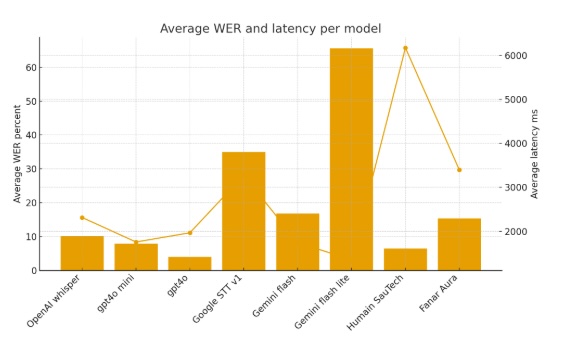
We run structured evaluations across major vendors, including stacks from Google, OpenAI and ElevenLabs, among others. We don't do this as a one time shootout. We want repeatable comparisons on the same prompts, the same regions and the same latency constraints, so when a provider ships a new model or endpoint we can see whether your dialect and your entities still pass.
If you're planning a serious rollout, we walk through the methodology and results in customer engagements: what we test, how we score, how we weigh subjective listening against automated signals, and how all of that ties to your channels and compliance model.
The benchmark that matters is the one built from your prompts, your noise profile, and your definition of acceptable.
That's a different article from "who won last quarter", and both have their place. This one is about why the problem is hard. The spreadsheet belongs in a room where we can argue about thresholds properly.
A score alone won't tell you much about voice quality. MOS style scores and similar metrics still show up in RFPs, but they rarely tell you whether a Gulf Arabic speaker will accept a voice as right for a bank, or whether a Turkish user will trust a long readout of terms and conditions.
So we use native speaking testers to check the subjective fit. Does this sound right to someone from that market, and not just to a spectrogram? Listening panels are slower than scripts, but they catch the "almost right" failures that automation misses and that kill trust.
Next to that we run benchmark suites and automated reporting, so regressions show up when a provider ships a new model or when traffic patterns shift. Agentic systems change often, and your speech layer needs a feedback loop instead of a pick you make once. We combine the two on purpose: people define what "good" means in a culture, and machines tell you whether you kept it after the last deploy.
Because we integrate with all major speech and model providers, we can route the same test content through different engines and compare quality, latency and failure modes. We're not tied to one logo on the slide, so we can recommend a stack that fits your region and hosting constraints instead of bending your requirements to fit a favorite vendor.
That matters when procurement wants option A and your Cairo or Istanbul pilot says otherwise. Neutrality is a feature, and also basic operational hygiene. When one provider gets worse on a dialect after an update, you need a way to benchmark again without rebuilding the whole product on another platform.
Pronunciation rules for digits, currencies, ordinals and ranges differ sharply between languages. In English you might read "2026" one way in a date and another way in a product name. In Arabic and Turkish, similar strings come with different expectations for pausing, grouping, and formal versus colloquial reading. Chinese, Japanese and Korean have their own conventions for grouping and reading numbers and dates, often next to Latin digits in enterprise data. Most providers tune their post processing for English and sometimes one "standard" form of a major language. Everyone else gets approximate behavior that's "good enough" right up until it isn't, which tends to be the first transaction that really matters.
We've built algorithms and normalization layers so the models get text they can actually say correctly in the target language and variety. It's dull engineering (rules, lexicons, disambiguation, tests around edge cases) and it's often what separates a demo from something people use every day. A voice assistant that reads "50,000" with the wrong grouping or stress sounds unsure of the amount, even when the logic underneath is correct. In reviews we keep running into account and reference numbers read as if they were ordinary integers, currency amounts where the spoken order of units doesn't match local habit, and dates and deadlines where month first versus day first collides with TTS defaults trained on US or UK English.
We deploy in public cloud, private cloud and on premises environments. Each one changes which models are available, what latency looks like, what licensing allows, and how quickly you can fall back when an upstream API changes behavior. An agentic workflow that runs beautifully in a US region with low RTT can feel very different once inference and speech endpoints have to stay in the country or on your own metal.
Open source speech models can be the right answer for sovereignty and cost. They're not automatically the best answer for every language. Sometimes the strongest commercial API still wins on dialect stability for your target. Sometimes a local or regional open model is the pragmatic choice once you count data residency and the price per minute. For Turkish we have a clear view of which options in the on prem style perform best today for specific use cases, and we don't pretend one label fits every workload. The same exercise applies when customers need Chinese or other Asian languages on private or air gapped infrastructure, where the best public cloud demo doesn't always survive your deployment boundary. Open versus closed in the abstract is the wrong debate. What counts is which combination survives your constraints and your listeners.
We regularly see effects of version and product line that contradict the idea that newer is always better for dialects. One example I'm comfortable sharing at a high level: in our Arabic dialect evaluations, a newer Realtime family line has not consistently beaten an earlier stack built for STT. The details belong in a customer readout, not a headline. For buyers the lesson is simple enough. Ship dates are not quality guarantees, especially for dialect.
We also see large gaps between providers that market heavily to a region and what native listeners accept as natural. We treat that as input for routing and testing, not as theater, because we care about a better outcome for the end user and not about a public ranking.
Then there's dialect drift, which is common. The output slowly sounds less like the target variety over a session, or the model falls back to a safer "standard" sound as the sentences pile up. One clip won't show it. We run additional checks on long conversations and in regression suites, so drift turns up before your customers notice it as inconsistency.
Dialect rule for production agentic voice:
If you have not measured your exact variety, with your entities,
on your channel, you do not yet know if it works.
Agentic AI raises the ceiling on what software can do by itself. For a huge share of the world's population, though, speech that gets the dialect right is still a bottleneck, because providers optimize for major languages and "standard" forms while users speak specific, lived varieties.
Optimism won't close that gap. What does is integration breadth, disciplined benchmarking, native validation and model choices that respect where you deploy. So if your roadmap includes voice in regional Arabic, Turkish, Chinese, or any similarly sensitive market, treat language variety as architecture rather than localization, and measure it the way you measure uptime. And if you want a second pair of ears on your own variety, you know where to find us.
I think it's great that technology is so embedded in our daily lives. It helps us get knowledge faster, finish tasks more efficiently, gives us inspiration, and occasionally scares the hell out of us with those crazy (fake) videos. I help a lot of companies implement AI, so in the end it pays my bills. But after spending a ridiculous amount of time with all these new technologies, it's time to write down the things I really hate about AI.
Read More →
AI Technology06-10-2026
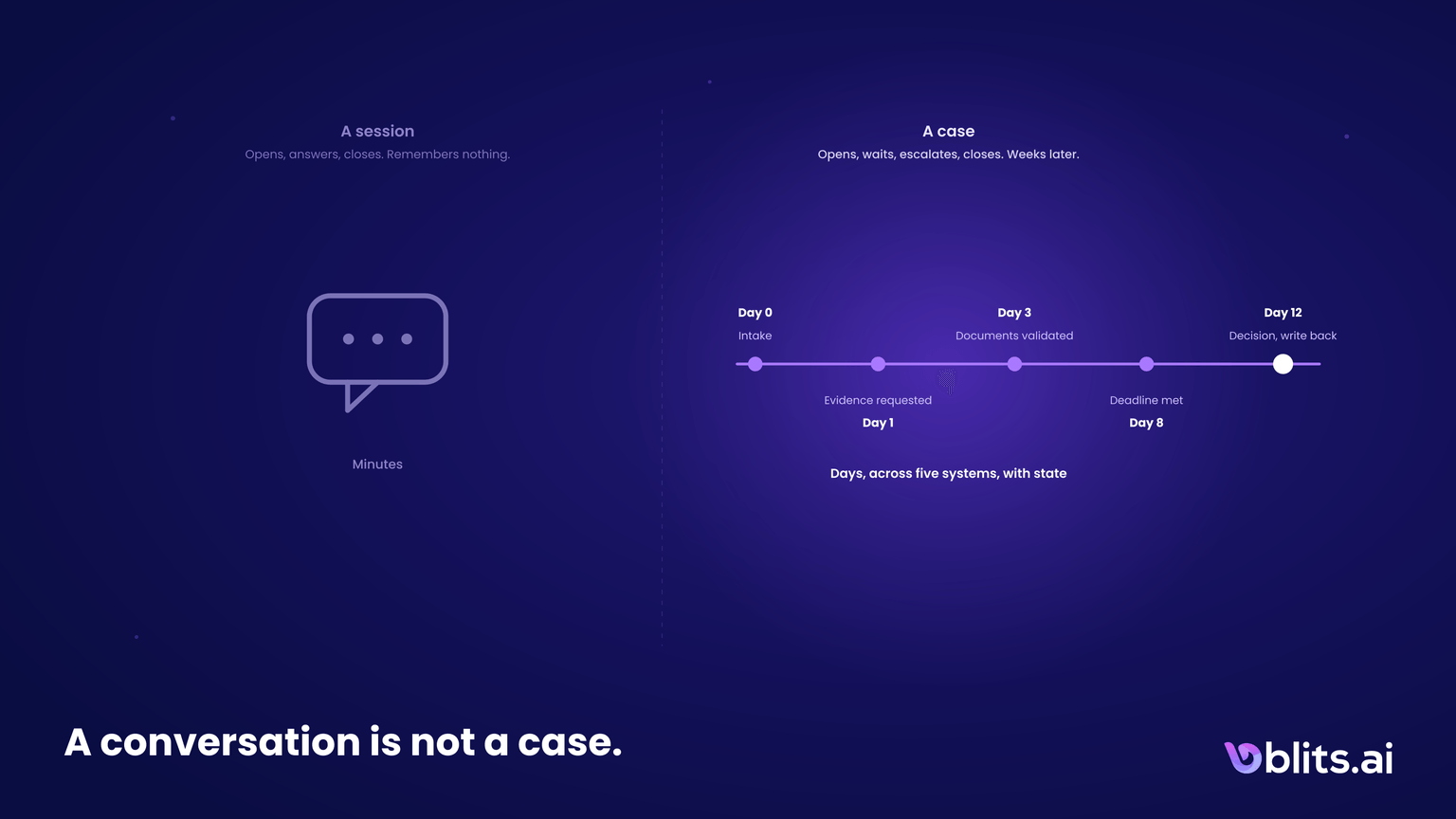
A Conversation Is Not a Case
The 95 percent pilot failure stat is making the rounds again, this time with a diagnosis I actually agree with: chatbots automate sessions, but a bank runs cases. Why the unit of work decides whether your AI survives production, and the day eight test that shows which one you built.
Read More →
AI Technology11-01-2026
Agentic Pay and the Moment AI Was Allowed to Spend Money
Why giving AI agents controlled access to payments changes a lot, and why the open question is who designs the rules they spend under.
Read More →
Stay Updated
New posts on conversational AI, enterprise automation and customer experience, sent to your inbox when they go live